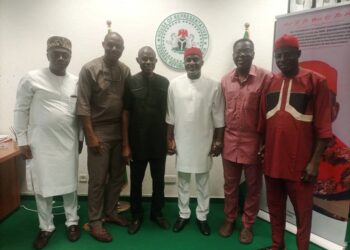


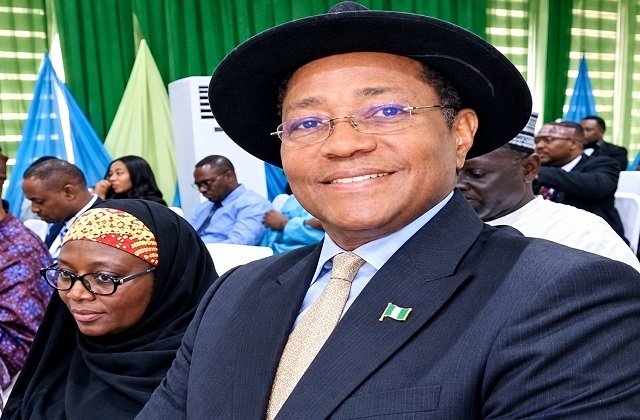
His Excellency Sir Dr. Sterling Ellis, ACS, CMA, Chartered MCSI, PhD, a transcontinental capital markets professional with extensive experience spanning Nigeria, the United States, and the United Kingdom, was among the distinguished participants at the maiden National Conference on Non-Interest Finance and Economic Development in Nigeria, held on Monday, September 14, 2026, in Abuja.
Organised by the Institute of Capital Market Studies (ICMS) of Nasarawa State University, Keffi, the conference, which took place at the NAF Conference Centre on Ahmadu Bello Way, brought together regulators, academics, industry practitioners, and policymakers to explore the role of non-interest finance in promoting inclusive growth and economic development.

Widely recognised as a financial management expert with more than two decades of experience, Dr. Ellis has built a reputation for advising individuals and institutions on optimising resources, strengthening long-term financial health, and advancing market development.
He is noted as the first Nigerian to achieve Chartered Member (Chartered MCSI) status with the Chartered Institute for Securities & Investment (CISI) of the United Kingdom, alongside his ACS, CMA, and doctoral qualifications.
The conference marked a significant milestone in the development of Nigeria’s non-interest finance sector. Central Bank of Nigeria Deputy Governor for Financial System Stability, Malam Lamido Yuguda, disclosed that the sector had grown to total assets of approximately ₦4.389 trillion, with financing and advances standing at ₦1.433 trillion.
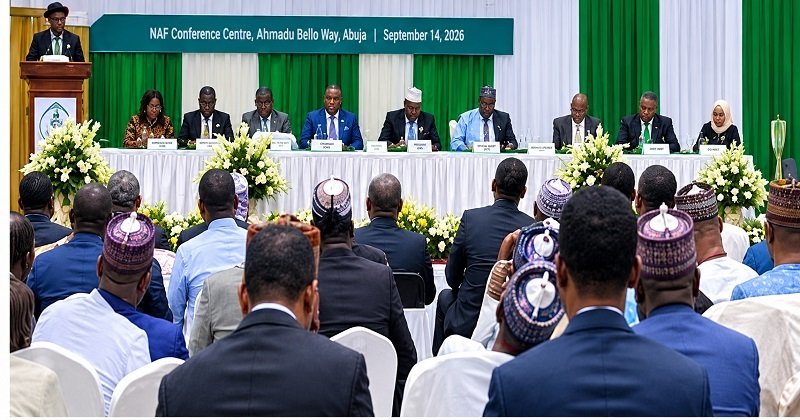
He noted that the sector had expanded from a single full-fledged non-interest bank in 2012 to five non-interest banks and one non-interest banking window, reflecting its growing presence in Nigeria’s financial system.
Speakers, including former Nasarawa State University Vice-Chancellor, Prof. Muhammad Mainoma, and other stakeholders, emphasised that non-interest finance should be viewed not merely as a faith-based alternative but as a development instrument that links capital more directly to productive activities.
They highlighted its potential to support risk-sharing, infrastructure development, small and medium-sized enterprises (SMEs), agriculture, and financial inclusion.
Dr. Ellis’s participation aligned with broader conversations on deepening ethical and alternative finance markets. His professional background, spanning Wall Street experience, including roles associated with major U.S. institutions, securities issuance capabilities in dollar-denominated instruments, and practical engagement with capital and commodity markets ecosystems, positions him as a voice on the institutional frameworks needed for Nigeria and Africa to participate more fully in global markets.
In prior public discussions, Dr. Ellis has highlighted the potential of Abuja to serve as an African financial hub, the importance of robust market infrastructure for price discovery and risk management, and the value of long-term capital formation.
The conference was held at the NAF Conference Centre and Suites in Kado, which provided a secure and well-equipped setting for the deliberations. Participants included representatives from the Central Bank of Nigeria, the Securities and Exchange Commission, academic institutions, and the non-interest finance industry.
Discussions also underscored the growing global relevance of Islamic and ethical finance, estimated in the multi-trillion-dollar range internationally, and Nigeria’s opportunity to expand its own non-interest finance segment.
The country’s non-interest finance ecosystem already includes sovereign Sukuk issuances, takaful operators, and Shariah-compliant funds, providing a foundation for further growth, innovation, and investment.
As the maiden conference concluded, participants called for research grounded in Nigeria’s legal and economic realities, greater product innovation, and practical pathways to channel ethical capital into the real sector.
The participation of distinguished professionals such as Sir Dr. Sterling Ellis underscored the intersection of international expertise and domestic policy priorities at a time when non-interest finance is increasingly recognised as a mainstream contributor to sustainable economic development in Nigeria.