

Nigeria’s northern corridor is being recast as the engine room of a broader regional economy, with the ruling All Progressives Congress (APC) insisting that the transformation is no longer aspirational but already underway.
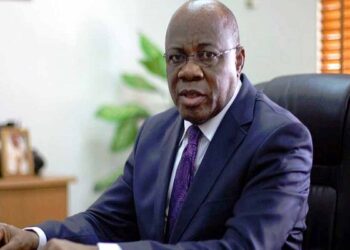
The party’s National Chairman, Professor Nentawe Yilwatda, says the Tinubu administration’s calibrated investments across infrastructure, education, and agriculture are converging into a single objective: repositioning Northern Nigeria as a dominant economic bloc with influence stretching across West and Central Africa.


In a statement signed by his Special Adviser on Media and Information Strategy, Abimbola Tooki, the APC National Chairman framed the current wave of federal interventions as deliberate and coordinated, noting that their “scale, depth, and intentionality” reflect a clear policy direction.
According to him, the North is being systematically rebuilt into a hub of productivity, trade, education, and infrastructure-driven growth.
At the core of this strategy is geography. Professor Yilwatda emphasised that the region’s proximity to countries such as the Niger Republic, Chad, Cameroon, and the Benin Republic positions it naturally as a commercial gateway. With the right investments, he argued, Northern Nigeria can anchor cross-border trade and regional integration while emerging as a commercial nerve centre for the sub-region.
He stated that the ongoing infrastructure revolution, spanning roads, rail, agriculture, energy, and education, will not only stimulate local economies but also deepen cross-border trade, enhance regional integration, and position Northern Nigeria as a commercial nerve centre for the sub-region.
Reinforcing this outlook, he declared: “The vision of President Bola Ahmed Tinubu for Northern Nigeria goes beyond politics; it is a well-thought-out economic and developmental strategy aimed at unlocking the vast potential of the region. Within the lifetime of this administration, the North will emerge as a strong economic powerhouse, driven by infrastructure, human capital development, and strategic investments.”
The administration’s infrastructure push, he explained, is both expansive and interconnected. Road networks linking Northern states to key commercial centres are being expanded and rehabilitated to enable seamless movement of goods and people.
Rail modernisation projects are extending connectivity between Northern cities, ports, and southern markets, reducing logistics costs and improving trade efficiency. In parallel, energy investments are targeting industrial clusters and rural communities to stabilise power supply, while agricultural value chains are being strengthened through irrigation schemes, mechanisation, and agro-processing zones designed to boost food security and export readiness.
Professor Yilwatda stressed that these initiatives are not isolated projects but components of a broader national framework aimed at integrating the North into global value chains and consolidating its role within the African Continental Free Trade Area (AfCFTA).
Human capital development, particularly through education, forms another pillar of the agenda. The APC chairman described the Nigerian Education Loan Fund (NELFUND) as a landmark policy intervention capable of reshaping access to tertiary education across the region. By removing longstanding financial barriers, he said, the scheme ensures that qualified students are no longer excluded from higher education due to economic constraints.
“Education is the backbone of sustainable development. With NELFUND, the children of the North now have a clear pathway to tertiary education, regardless of their socio-economic background. This is a transformational policy that will redefine the future of the region,” he stated.
Beyond infrastructure and education, agriculture remains central to the administration’s economic recalibration of the North. Professor Yilwatda pointed to renewed federal attention to farming and rural development, noting that improved security measures are restoring confidence in agrarian communities and driving productivity.
Government priorities, he said, include large-scale farming initiatives to strengthen food security, support for livestock development and modern ranching systems, expanded access to financing for farmers and agribusinesses, and the revitalisation of dams and irrigation infrastructure.
These measures, he added, are expected not only to meet domestic food demands but also to position the region as a major exporter of agricultural commodities to neighbouring countries.
While outlining these gains, the APC National Chairman called for broad-based support from stakeholders across the North—including traditional rulers, political leaders, youth groups, business communities, and civil society—to sustain the momentum. He warned that narrow political interests could undermine what he described as a historic opportunity.
“This is a defining moment for the North and for Nigeria. We must not allow narrow personal interests to truncate a historic opportunity for regional transformation. The future we seek requires collective commitment and unity of purpose,” he said.
Professor Yilwatda also used the occasion to underscore President Tinubu’s political credentials, describing him as a resilient democrat with a longstanding record of pro-democracy activism dating back to the Abacha era.
“President Tinubu is a dogged fighter for democracy, a man whose political journey has been defined by courage, vision, and consistency. His commitment to national development is unquestionable, and his plans for the North are evidence of his inclusive leadership,” he said.
In contrast, he criticised opposition elements, questioning their cohesion and capacity to govern. “Their actions have exposed them as unreliable. They cannot organise or administer their own political parties, yet they aspire to lead a complex nation like Nigeria.
“As soon as they jump into a political party, they destroy it when they realise that their inordinate ambition cannot be met and move to the next party. Entrusting them with power would risk taking the country several years backward,” he stated.
Reaffirming the administration’s commitment, Professor Yilwatda maintained that the Northern development agenda under President Tinubu is both genuine and unprecedented in scope. He assured that the APC remains focused on delivering measurable outcomes that will secure long-term prosperity for the region.
“The North is on the path to renewal. With sustained support, visionary leadership, and collective responsibility, we will build a region that stands tall, not just within Nigeria, but across Africa,” he affirmed.